Showing 40 of 1584 results for Workplace exposure standards and biological exposure indices

Workplace exposure standards and biological exposure indices

The workplace exposure standards (WES) and biological exposure indices (BEI) are intended to be used as risk criteria for health risk assessment and risk management, and applied only by people with appropriate training and experience.

Workplace exposure standards and biological exposure indices

All substances

Search for all substances in the workplace exposure standards (WES) and the biological exposure indices (BEI).

All substances

Applying the workplace exposure standards

How to apply the workplace exposure standards (WES).

Applying the workplace exposure standards

Applying the biological exposure indices

How to apply the biological exposure indices.

Applying the biological exposure indices

WES and BEI notation explanations

Explanations of the notations used for WES and BEI.

WES and BEI notation explanations

How we set workplace exposure standards and biological exposure indices

This policy explains the role of workplace exposure standards (WES) and biological exposure indices (BEI) produced by WorkSafe and sets out the approach we take to managing and developing them.

How we set workplace exposure standards and  biological exposure indices

Workplace exposure standards (WES) and biological exposure indices (BEI) – 15th edition (PDF 1.4 MB)

TYPE:   Report
TOPIC:   Asbestos, Biological, Chemicals, Clean air - carbon monoxide, Clean air - dust, Clean air - silica dust, Exposure monitoring, Eye safety, Fumigation, Gas, Hazardous substances, Hazardous substances - insecticides, Health monitoring, Work-related health
ISSN:  
3021-3487 (online)
 

Glossary and notations

Get familiar with the terms used within the workplace exposure standard (WES) and biological exposure indices (BEI).

Glossary and notations

Regulations, legal requirements and rights

Obligations and rights under the Health and Safety at Work Act 2015 (HSWA) and Health and Safety at Work (General Risk and Workplace Management) Regulations 2016 (GRWM Regulations).

Regulations, legal requirements and rights

Health and exposure monitoring

Health monitoring and exposure monitoring are an important part of ensuring the health of workers

Health and exposure monitoring

Managing lead-based paint

Exposure to lead-based paint can cause lead poisoning which can be a serious illness. Many older buildings have been painted with lead-based paint and precautions should be taken when removing this paint.

Managing lead-based paint

Operational policies

Operational policies provide the detail of the activities that contribute to programmes and overall interventions (including degrees of discretion etc) that achieve the objective of the legislation. They provide context and parameters to support discretionary decision making

Operational policies

Forklifts and carbon monoxide

This guidance is for PCBUs that use forklifts. It explains the risks of carbon monoxide poisoning when using fuel powered forklifts and how to keep your workers healthy and safe.

Dangers of carbon monoxide

Carbon monoxide is a common and deadly poison. It has no smell, no taste, doesn’t irritate your nose, mouth or skin and it is invisible. It has caused serious illness and deaths at work

Welding and local exhaust ventilation

This fact sheet provides information on some of the health risks associated with welding, LEV systems used for welding and their limitations.

Welding and local exhaust ventilation

Management and removal of asbestos

This Approved Code of Practice sets out WorkSafe New Zealand’s (WorkSafe) expectations about how to comply with asbestos health and safety law, including the Health and Safety at Work (Asbestos) Regulations 2016.

Management and removal of asbestos

Industrial vacuums and portable extractors for hazardous dust

This guidance advises PCBUs how to choose, use and maintain industrial vacuums and portable extractors for controlling hazardous dust at work.

Industrial vacuums and portable extractors for hazardous dust

Excavation safety

Guidelines for managing the health and safety risks associated with excavation work.

Excavation safety

Paint, printing inks and resins

Manufacturing paints and inks can have long-term effects on the health of people working in the industry. Precautions need to be taken with the range of solvents and chemical additives used in the manufacture of paints, printing inks and resins.

Paint, printing inks and resins

Work-related health

This position sets out our expectations of duty holders in following the work-related health requirements of the Health and Safety at Work Act 2015 (HSWA) and the Health and Safety at Work (General Risk and Workplace Management) Regulations 2016.

Work-related health

Local exhaust ventilation

This guidance is for persons conducting a business or undertaking (PCBUs). It explains some factors to consider when selecting, using and maintaining a local exhaust ventilation (LEV) system.

Health and safety in welding

Guidance covering a range of topics including training and qualifications, fire and explosion prevention, local exhaust ventilation, and noise and vibration

Health and safety in welding

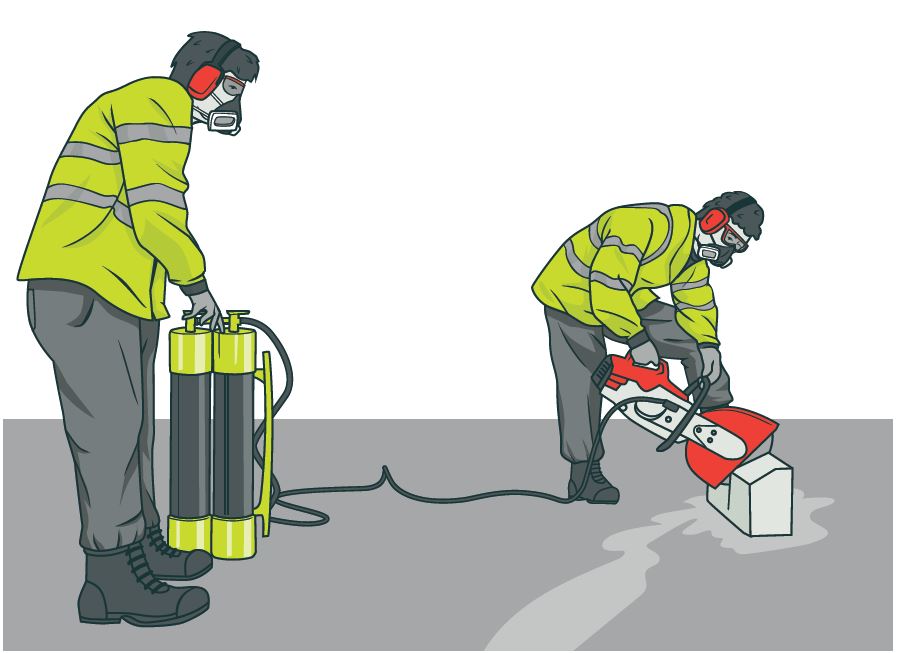
Controlling dust with on-tool water suppression

This guidance advises PCBUs how to choose, use and maintain an on-tool water suppression system to control dust.

Controlling dust with on-tool water suppression

Definitions and acronyms

Definitions of some key terms, concepts and acronyms used on this and other associated websites

Definitions and acronyms

Safe work with precast concrete

These guidelines offer advice on the safe handling, transportation and erection of precast concrete elements.

Safe work with precast concrete

Protective clothing

This guide offers advice for PCBUs on what to consider when selecting protective clothing and outlines requirements for providing and maintaining protective clothing for workers.

Protective clothing

Silica dust in the workplace

This guidance advises PCBUs of the risks of respirable crystalline silica dust and how to control them and protect their workers.

Silica dust in the workplace

General risk and workplace management - part 2

Part 2 of the guidance on the Health and Safety at Work (General Risk and Workplace Management) Regulations 2016.

Maintaining air quality in enclosed cabins – for PCBUs

This quick guide is for persons conducting a business or undertaking (PCBU). It explains some factors to consider when managing risks from poor quality air in mobile plant cabins, fixed plant control rooms, and enclosed truck cabins.

Maintaining air quality in enclosed cabins – for PCBUs

Safe sheep shearing guide

The purpose of these guidelines provide advice on how to keep people safe in the shearing industry.

Safe sheep shearing guide

16.0 Exposure monitoring

Showing 40 of 1584 results for Workplace exposure standards and biological exposure indices